
Z.ai’s New “Ox Alpha” Mystery Model Is Real, Open, and Stupidly Cheap
Earlier this week I found myself reading through OpenRouter’s coding leaderboard, as you do, and noticed a model called “ox-alpha” sitting near the top. No vendor name, no model card, no explanation. Just a mysterious endpoint outperforming models that cost twenty times more. Two days later Z.ai pulled the curtain back: it was GLM-5.3-Flash, and the weights were already on Hugging Face under an MIT license.
I’ve spent the last couple of days working with this model (full disclosure: parts of this very blog post pipeline run on it), and I think it resets expectations for what the open-weight tier delivers. Here’s the breakdown.

What GLM-5.3-Flash Actually Is
Released on August 26, 2026, GLM-5.3-Flash is Z.ai’s new Flash-tier model, and the headline specs are worth stating plainly:
- Architecture: sparse Mixture-of-Experts with 320B total parameters and 18B active per token, across 45 layers
- Context: 1M-token class window, with 131,072 max output on the API
- Modalities: natively multimodal, the first in the GLM-5 series. Text, images, video, and files go in; text comes out
- Reasoning: always on. There’s a
reasoning_effortparameter (low,high,max) that defaults tomax, and you cannot disable thinking entirely - License: MIT, with FP8 and BF16 checkpoints on Hugging Face at
zai-org/GLM-5.3-Flash
The interesting engineering bit is the attention design. GLM-5.3-Flash pairs linear attention (which handles local dependencies through state modelling) with sparse attention (which retrieves global context through a lightweight indexer called IndexPool). Z.ai claims this cuts attention compute by 3x and KV cache size by 4.4x versus the full GLM-5.3 at long context. Those are vendor numbers without independent measurement yet, but the cost profile of the API service is consistent with them.
For comparison with the GLM-4.5 series: similar total parameter count (320B vs 355B), but nearly half the activated parameters (18B vs 32B) and half the layers (45 vs 92). The model was trained from a new base on a 30T-token multimodal corpus.
The Ox Alpha Backstory
Worth a paragraph, because it’s genuinely unusual. For about six days before launch, the model ran anonymously as “ox-alpha” on OpenCode and OpenRouter. During that stealth week it reportedly served 62 trillion tokens and became the most popular model on the platform. Z.ai later said the entire preview ran on a cluster of 100,000 domestically produced Chinese chips, using a custom SGLang-based inference stack with W8A8 quantization and a disaggregated Encode-Prefill-Decode architecture.
Which chips exactly? Nobody outside Z.ai knows. Reporting points at Huawei, Moore Threads, and Hygon as candidates, all unconfirmed. Either way, serving a frontier-class model at stealth-week scale entirely on domestic silicon is a geopolitical statement as much as an engineering one, and Z.ai’s shares jumped on the news.
One caution from that week: a fake 80% benchmark figure went viral before the reveal. The real numbers are lower. They also survived independent testing, which matters more.
Benchmarks: The Numbers Actually Held Up
This is the part that surprised me. Vendor benchmark tables usually shrink on contact with independent harnesses. This one didn’t.
Z.ai’s launch table puts GLM-5.3-Flash at:
| Benchmark | GLM-5.3-Flash | GLM-5.2 | Claude Opus 4.8 |
|---|---|---|---|
| DeepSWE v1.1 | 63.4% | 46.2% | not published |
| AutomationBench | 48.8% | 26.2% | not published |
| Z.ai Code Bench v1.0 (max effort) | 29.0 | – | 29.5 |
The last row is the source of every “matches Claude at a tenth of the price” headline. On an in-house Z.ai benchmark, so take it with the appropriate salt, but it’s directionally consistent with the rest.
The independent checks: the official DeepSWE leaderboard carries a glm-5.3-flash entry at 63% with a 4-point margin, matching the self-reported 63.4. A community run against the anonymous ox-alpha endpoint before the reveal landed at 58.4% on the same suite, inside the same confidence band. Artificial Analysis independently scores it 57 on their Intelligence Index v4.1.1, which is frontier territory for this price point.
Against the other open-weight heavyweights: DeepSeek-V4-Vision-Exp loses on DeepSWE (59.3 vs 63.4) and AutomationBench (38.8 vs 48.8). Kimi K3 splits the difference: it leads on deep reasoning suites like Terminal-Bench (88.3 vs 84.3), while GLM-5.3-Flash edges ahead on tool-heavy automation (Toolathlon 78.4 vs 76.5). One honest caveat: these tables mix each vendor’s self-reported numbers, so read them as positioning rather than a neutral lab’s verdict.
Pricing That Changes the Math
Z.ai’s list price:
- Input: $0.15 / 1M tokens
- Cached input: $0.03 / 1M tokens
- Output: $0.50 / 1M tokens
There’s a 50% launch discount until September 9, 2026, halving those rates. OpenRouter mirrors the promo prices. Cached input is a fifth of fresh input, which rewards agent setups with long stable system prompts, and that describes most serious coding harnesses.
Two cost mechanics worth knowing before you build on this:
- Reasoning always runs, and thinking tokens land on your output bill.
reasoning_effortis your main cost lever. Usemaxfor hard agentic tasks,lowfor classification and extraction where deep thinking just burns money. - It’s not fast in interactive loops. Artificial Analysis measured a median time-to-first-token around 42 seconds on reasoning-heavy suites, because mandatory reasoning at the max default thinks before it speaks. Other harnesses report first tokens in a second or two. For overnight agents nobody notices latency; for interactive work, turn reasoning effort down.
Also worth budgeting for: during the preview, OpenRouter logged a tool-call error rate around 4.5%, including cases where the model skipped the tool call entirely. Build retries into any agent pipeline.
Native Vision, Aimed at the Coding Loop
The multimodal part isn’t a bolted-on vision model; it’s trained into the loop. Z.ai’s argument is that for frontend work, game development, and 3D simulation, the deliverable is an interface or an experience rather than code, and many failures only surface on rendering or playtesting. So the model is trained to decide when to look, inspect its own rendered output, and iterate.
Documented use cases include:
- Screenshot-to-Next.js reproduction
- Godot game prototypes with playtest feedback loops
- Blender scenes and build123d CAD models
- PPTX, DOCX, and XLSX deliverables, with the model rendering and visually inspecting its own output
- Computer-use and GUI automation in environments with no structured API
I haven’t stress-tested the vision side deeply yet, but the design intent is clear and different from “we added a vision encoder.” The model is meant to look at what it built and fix it.
Can You Self-Host It? Yes. Should You? Probably Not
Here’s where I get to correct the most repeated mistake of launch week. “18B active parameters” does not mean the model fits in 18B-class hardware. Active parameters cut per-token compute, but the full 320B checkpoint still has to sit in memory, because the router picks between experts at runtime, per token.
The real numbers from Z.ai’s serving recipe: the FP8 checkpoint is about 306 GiB of weights with roughly 386 GiB of VRAM recommended. BF16 doubles that. Two H200s (282 GiB combined) don’t clear the bar, so there’s no two-GPU entry point. The practical floor is an 8-GPU Hopper-class node. Quantization helps: a 4-bit GGUF lands around 160 GB, and Unsloth publishes 1-bit and 3-bit builds claiming 100-128 GB of combined RAM and VRAM. Those are community builds at aggressive compression, fine for experiments and a stretch for production.
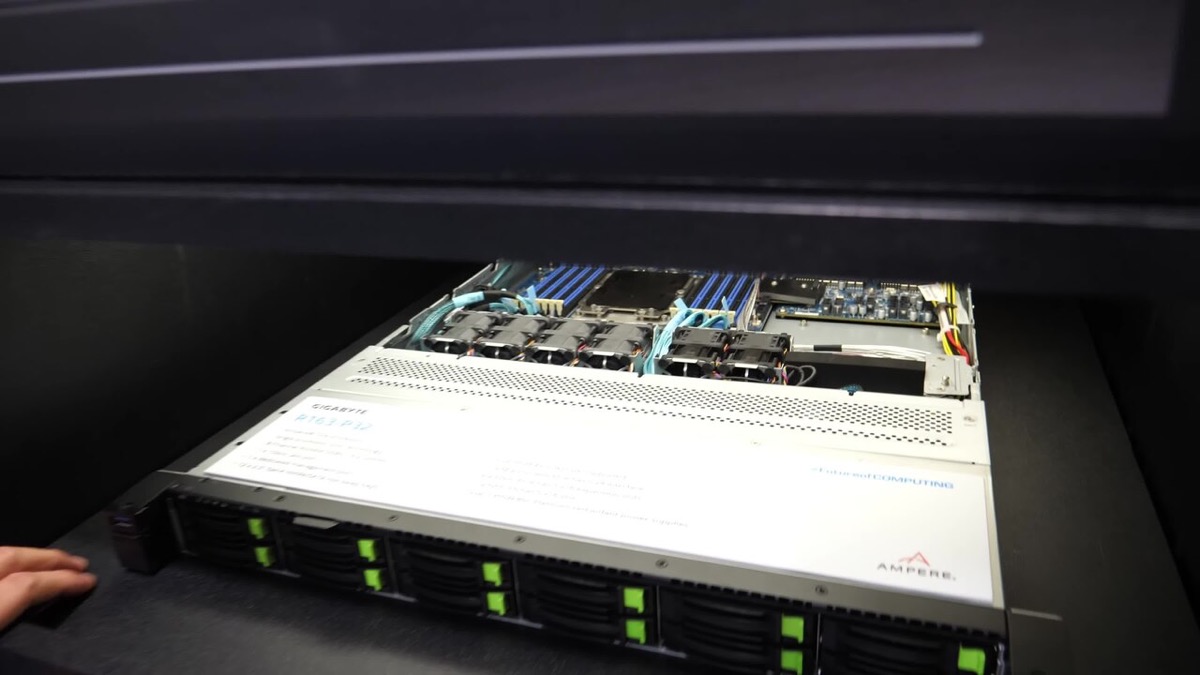
My honest recommendation for almost everyone: use the API. At promo pricing, a million output tokens costs a quarter. The 8-GPU node self-hosting needs costs more per day than most teams will spend on the API per month. Self-hosting makes sense in exactly two cases: sustained high volume, or data that can’t leave your infrastructure. The second one matters here, since the API is served from Z.ai’s stack in China.
Engine support is unusually good for a day-one release, though: vLLM, SGLang, KTransformers, TokenSpeed, and Transformers are covered in the official docs, with llama.cpp support via community GGUFs.
Getting Started with the API
Enough theory. Here’s how to actually use the thing. The hosted model is served through the Z.ai API as glm-5.3-flash, and it’s OpenAI-compatible, so any existing harness works with a base URL swap.
pip install zai-sdk
export ZAI_API_KEY="your-key-here"
A minimal agent-style call with vision input:
from zai import ZaiClient

client = ZaiClient()  # reads ZAI_API_KEY from env

response = client.chat.completions.create(
    model="glm-5.3-flash",
    reasoning_effort="low",  # your main cost lever
    messages=[
        {
            "role": "user",
            "content": [
                {
                    "type": "image_url",
                    "image_url": {"url": "https://example.com/screenshot.png"},
                },
                {
                    "type": "text",
                    "text": "Reproduce this UI as a single Next.js page component.",
                },
            ],
        }
    ],
)

print(response.choices[0].message.content)
The image goes in as a content block alongside the text, same pattern as other OpenAI-compatible multimodal APIs. For pure text agent work, drop the image block and you’re done.
If you’re on OpenRouter, the route is z-ai/glm-5.3-flash, currently served by a dozen providers at the promo prices. And if you’re on the GLM Coding Plan, the model is included with three times the quota of GLM-5.3, which makes it the obvious default for coding assistants.
How It Fits the Current Open-Weight Landscape
The pattern of the last few months is clear. Kimi K3 at 2.8T parameters, DeepSeek V4 undercutting everyone on price, and now Z.ai shipping near-frontier agentic performance at a tenth of GLM-5.2’s cost. The open-weight tier is no longer “six months behind the closed labs.” On tool-heavy agentic work, it’s competitive today, and on price it isn’t even the same sport.
For a team choosing today, my practical summary:
- Kimi K3 for long-horizon deep reasoning
- GLM-5.3-Flash for agents that live inside tools, and anything where cost per task matters
- DeepSeek V4 as the general-purpose price floor
- Check the price column before any of the above
Verdict
GLM-5.3-Flash is the cheapest route to near-frontier agentic coding available right now, and the benchmark claims held up under independent testing, which is rarer than it should be. Go in with open eyes about two things: latency from the mandatory reasoning, and a self-hosting hardware bill that puts it out of reach of hobbyist rigs.
The stealth week proved the demand. The pricing makes it sustainable. What it does to DeepSeek’s next release is the sequel worth watching.